
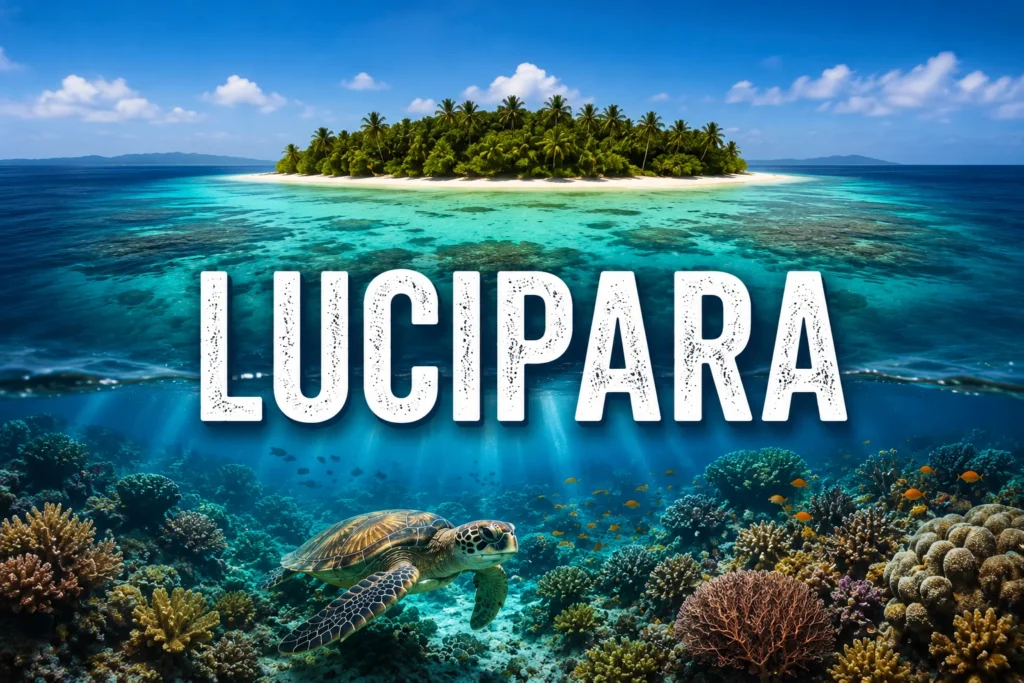
What Kind of Place Is Lucipara?
When people first hear about Lucipara, they often imagine another tropical destination with busy beaches and luxury resorts. The reality feels very different. Hidden deep in the Banda Sea, this remote part of Indonesia has a raw atmosphere that is difficult to compare with modern island tourism. I remember reading expedition notes from divers and marine researchers before learning more about the region, and almost every description carried the same feeling: distance, silence, and respect for nature.
The islands are known as an atoll-like island and reef system surrounded by wide open water. Instead of large towns or heavy infrastructure, the area is shaped by reef flats, shallow lagoons, sandy edges, and dramatic underwater drop-offs. The landscape feels untouched because the focus here is not on buildings or nightlife. The real attraction is the natural environment itself.
Across the wider Maluku region, the sea is famous for its incredible depth and powerful marine conditions. Around Lucipara, the sea floor falls sharply beyond the calm blue shallows, creating a sense of mystery below the surface. This part of the Banda Sea is connected to deep ocean basins, making the islands feel small against such an immense marine setting. During sunrise and sunset, the white reef margins glow under the light while the surrounding water changes between turquoise and dark blue.
Because of this unusual geography, many travellers describe the islands as both peaceful and dramatic at the same time. The area combines the beauty of a tropical escape with the feeling of standing beside an untamed ocean wilderness. The low-lying marine landscape, scattered coral formations, and isolated reefs make Lucipara feel more like a living marine frontier than a normal holiday destination.
Geographic Position and Isolation
The location of Lucipara plays a major role in preserving its character. The islands lie around 200 kilometres south of Ambon inside the open waters of the Banda Sea. Unlike coastal destinations connected by roads and airports, this remote marine environment depends heavily on sea travel.
Most people can only reach the islands by boat access, often during limited seasonal windows near the monsoon transition. Travellers usually need careful travel planning, calm sea conditions, and local guidance before attempting the journey. Even experienced sailors treat the region with respect because the surrounding waters can quickly shift from calm to rough.
This difficult access has protected the islands from large-scale tourism and commercial development. While many coastal destinations across Southeast Asia have changed rapidly, Lucipara still keeps much of its natural identity. The remoteness has allowed the marine ecosystem to survive with less pressure from mass tourism, crowded beaches, and industrial activity.
At the same time, the isolation creates a stronger connection between visitors and nature. Divers, researchers, and expedition travellers often describe the experience as stepping away from modern routines and entering a slower world guided by tides, weather, reefs, and open ocean. The feeling of being far from crowded cities is one of the biggest reasons why the islands remain so memorable.
Why Do Divers and Marine Researchers Speak So Highly of Lucipara?
The answer becomes clear once you look below the surface. Scientific reports and diving expeditions repeatedly describe the reefs around Lucipara as some of the healthiest in Indonesia. A 2023 scientific study highlighted strong coral cover, impressive reef-fish biomass, and a healthy number of large predatory species across surveyed reef sites.
For marine scientists, these findings are important because healthy reefs are becoming harder to find worldwide. Coral ecosystems in many tropical regions are under pressure from climate change, pollution, and destructive fishing methods. Yet the reefs around Lucipara continue to support rich marine biodiversity and complex underwater ecosystems.
Divers often speak with excitement about the underwater scenery. Large reef walls covered with soft corals, black corals, barrel sponges, and giant sea fans create colourful underwater landscapes. Schools of fish move through the currents while larger species such as groupers, rays, and even sharks appear around deeper sections of the reef.
What makes the experience different is the sense of natural balance. Many reefs around the world feel damaged or overcrowded, but here the ecosystem still appears alive and active. The combination of thriving coral formations, healthy predator populations, and clear tropical waters gives the region an atmosphere that feels rare in modern marine tourism.
Marine researchers also value the islands because they provide insight into how reef ecosystems function under lower human pressure. The isolation of the area has helped preserve ecological processes that are disappearing elsewhere. For conservation experts, this makes Lucipara not only beautiful, but scientifically important as well.
Lucipara and the Importance of Sea Turtles
One of the strongest symbols of the islands is their connection with sea turtles. Conservation groups and travel observers regularly mention the large number of turtles found around the reefs and beaches. During a 2021 Coral Triangle Center expedition, researchers recorded more than 1,100 turtles, including green turtles, hawksbill turtles, and some loggerheads.
These sightings are not only exciting for visitors. They show that the islands continue to serve as a valuable marine refuge for endangered species. Because there are no permanent villages across much of the island group, the beaches and nearby waters remain relatively undisturbed. In several reports, divers described seeing turtles feeding in the shallows while fresh turtle nesting tracks appeared along quiet beaches during the early morning. This kind of environment is becoming increasingly rare across tropical marine regions.
The importance of these nesting sites goes beyond tourism. The beaches function as critical ecological spaces where turtles can breed, rest, and continue their migration cycles. Healthy nesting areas also support broader marine biodiversity because turtles play an important role within coral reef ecosystems. The combination of isolation, stable habitats, and limited development has allowed the islands to become a natural refuge for marine wildlife. For many conservationists, protecting these beaches means protecting an entire living system connected to the wider Banda Sea ecosystem.
Why Conservation Matters So Deeply Here
The same remoteness that protects Lucipara can also create risks. Because the islands sit far from major population centres, illegal activities can be difficult to monitor. Some environmental studies have warned about destructive fishing, growing marine debris, and other human pressures affecting nearby marine resources.
It is easy to romanticise remote places, but experts remind us that isolation alone does not guarantee safety. Coral reefs can still suffer from reef damage, pollution, habitat destruction, and environmental change linked to warming oceans.
This is why conservation planning has become increasingly important in the region. Organisations such as the Coral Triangle Center have carried out ecological and socio-economic surveys to support the development of a future marine protected area. The Maluku provincial government has also included the islands within broader marine zoning and conservation strategies.
Researchers believe long-term protection could help preserve reef biodiversity, turtle habitats, and important ecological processes across the surrounding waters. Sustainable management may also reduce the risk of illegal fishing and environmental decline.
From my own perspective, this is what makes Lucipara so fascinating. The islands are beautiful, but they also represent a larger global question about how humanity protects fragile marine ecosystems before they disappear. Places like this remind us that healthy reefs are not guaranteed forever.
Why Lucipara Continues to Fascinate
A lot of tropical islands look beautiful in photographs, but very few stay in your mind afterward. Lucipara feels different because the experience is not only about scenery. People remember the silence, the distance, and the feeling that nature still controls the rhythm of life there.
I spoke once with a diver who described arriving near the reefs just before sunrise. He said the first thing he noticed was not the colour of the water, but the complete absence of noise. No beach clubs, no traffic, no crowds — only wind, waves, and the sound of the ocean moving around the reef edges. That kind of atmosphere is becoming rare across modern tropical destinations.
Divers continue returning because of the pristine coral systems and remarkable underwater biodiversity. Sailors admire the challenge of crossing open waters in the Banda Sea and reaching a place that still feels genuinely remote. Marine scientists focus on the ecological richness, reef resilience, and healthy marine habitat found around the islands. Even casual readers become curious because the islands seem connected to an older and slower world.
Unlike heavily commercialised tourism spots, Lucipara has managed to avoid overdevelopment and constant exposure on social media travel trends. The islands still carry mystery. The isolated reef formations, deep ocean surroundings, and healthy coral ecosystems create a landscape that feels both peaceful and powerful at the same time.
What makes the region truly memorable is that it represents both fragility and strength. The reefs remain alive, sea turtles continue nesting, and the wider marine ecosystem still supports an impressive range of wildlife. Yet at the same time, everyone understands that places like this can change quickly if protection disappears.
For many travellers, researchers, and conservationists, Lucipara is no longer just another island group in eastern Indonesia. It has become a symbol of what the marine world used to look like before overdevelopment reached so many tropical coastlines.
Frequently Asked questions
What makes Lucipara different from other islands in Indonesia?
Lucipara stands out because of its remote setting, healthy coral reefs, and limited human development. Unlike crowded tourist islands in Indonesia, Lucipara offers a quieter and more natural marine environment where reefs, sea turtles, and underwater ecosystems still thrive with minimal disturbance.
How can travelers reach Lucipara in the Banda Sea?
Reaching Lucipara usually requires boat travel from parts of the Maluku region, including routes connected to Ambon. Due to changing weather and monsoon transition periods, most visitors plan trips carefully with experienced local operators or diving expeditions.
Why is Lucipara considered important for marine conservation?
Marine researchers and conservation groups consider Lucipara important because the islands support strong coral cover, diverse reef-fish populations, and nesting areas for sea turtles. Its relatively isolated location in the Banda Sea has helped preserve marine biodiversity that is declining in many other tropical regions.
What marine life can be seen around Lucipara?
The waters around Lucipara are home to a wide range of marine species, including green turtles, hawksbill turtles, reef fish, groupers, rays, and occasionally sharks. Divers also explore colourful coral formations, sea fans, and deep underwater reef walls.
Is Lucipara suitable for regular tourism?
Lucipara is better suited for adventure travellers, divers, sailors, and nature enthusiasts rather than mainstream resort tourism. The islands remain remote, with limited infrastructure, which is part of what makes the destination appealing to people looking for a more authentic marine experience.
Conclusion
In the end, Lucipara stands out because it combines ecological richness, natural beauty, and geographic isolation in a way that few tropical destinations still can. Hidden within the vast Banda Sea, the islands continue to support healthy coral reefs, thriving marine biodiversity, and important wildlife habitats.
The future of the region will depend heavily on careful conservation and responsible protection. Healthy reefs, stable turtle nesting grounds, and clean marine ecosystems cannot survive without long-term environmental management. What makes the islands unforgettable is the feeling that nature still leads here. The reefs remain alive, the waters remain wild, and the atmosphere still carries a sense of wonder that has disappeared from many other marine destinations.