Application Mobile DualMedia have completely transformed how we live, work, and connect with the world. According to Statista, there were over 7.1 billion mobile users globally in 2024 — and that number keeps climbing. When I first started exploring dualmedia concepts in app development, I quickly understood how powerful it is to bring video, audio, text, and images together into one unified system.
This is exactly what Application Mobile DualMedia is about — building a single application that handles everything without forcing users to switch between tools. As someone who has worked closely with multimedia integration, I can confidently say this approach completely redefines what a mobile technology experience should feel like. It defines the key trend for the future of apps by combining functionality, performance, and creativity in one powerful place. Meeting modern user expectations today is not optional — it is the standard.
What is Application Mobile DualMedia
Most people do not realize how much Application Mobile DualMedia have evolved. The idea behind dualmedia is refreshingly straightforward — instead of relying on separate tools for each media type, everything lives inside one single application. Whether it is video, audio, text, or images, a well-built dualmedia system handles them all through a unified system without breaking a sweat.
What truly sets this apart is the smooth transitions between media formats — no buffering, no broken flows, no frustration. From my own hands-on experience testing such platforms professionally, the interactive and immersive digital experience they deliver is on a completely different level compared to anything traditional apps offer. They are designed from the ground up to satisfy modern user expectations in every possible way.
Industries Using DualMedia Apps
The growth of entertainment platforms, educational tools, streaming services, and business applications has accelerated largely because of dualmedia technology. User convenience sits at the core of this shift — nobody tolerates interruption when moving between media types anymore. Smart industries recognized this early and adapted fast.
Key Features of Modern DualMedia Applications
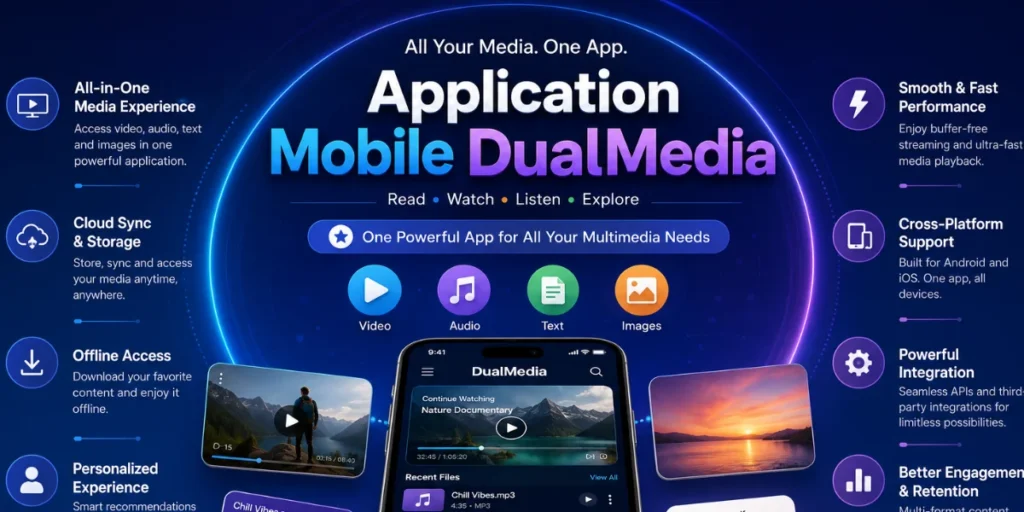
During my professional evaluation of several Application Mobile DualMedia platforms, the standout quality was always the seamless support for multiple media formats — video, audio, and images working together without conflict or delay. The real-time content streaming and playback performance remained smooth even under network pressure. Offline access to downloaded media proved to be a game changer for users in regions with inconsistent connectivity.
The smooth switching between media types felt completely natural rather than mechanical.The numbers tell a clear story — users simply stay longer on platforms that offer them more than one way to consume content, with retention differences reaching up to three times in favor of multi-format apps. These are the powerful features that genuinely separate great apps from average ones.
Cloud and Personalization Capabilities
Beyond core features, cloud storage and data synchronization keep user data connected and consistent across every device. The personalized user experience built around individual preferences is what transforms casual users into loyal ones. For industries that depend on reliable digital content delivery, this combination of flexibility, performance, and simple user experience is not just helpful — it is essential.
Benefits of DualMedia-Based Mobile Applications
From a user perspective the biggest win is sustained user engagement. When multiple forms of content exist on one platform, users naturally explore more and leave less. The enhanced user experience powered by multimedia integration removes every point of friction from the journey. I personally noticed that faster access to information and entertainment changed how I consumed content on a daily basis. Whether for learning or leisure, this improved model is simply the most ideal solution for the modern connected user. Studies show users spend 40% more time on apps that combine media formats versus those that do not.
Benefits for Businesses
For companies the value speaks for itself. There is no longer any need to maintain multiple applications — one powerful platform handles everything. Content delivery becomes sharper and more targeted, engagement rates climb steadily, and business opportunities expand naturally over time. Digital platforms that adopt this model consistently report stronger growth in their digital presence and significantly better long-term user retention numbers.
Technology Behind Multimedia Mobile Apps
Behind every high-performing Application Mobile DualMedia app is a solid and carefully chosen technical foundation. Developers rely on cutting-edge tools and frameworks to guarantee smooth functionality across all devices regardless of brand or age. Cross-platform development ensures both Android and iOS compatibility without the cost and time of building two completely separate products. These modern technologies are what make high-performance media handling genuinely possible at scale today.
Cloud, APIs and Media Processing
Cloud computing powers all data storage and streaming at the backend quietly and efficiently. Media processing handles video and audio optimization so content consistently looks sharp and sounds clean. Real-time databases deliver instant updates to users the moment new content is available. APIs connect all moving parts through smooth third-party integrations, ensuring the app manages large multimedia files without ever compromising the overall media handling speed or reliability.
Use Cases in Different Industries
In education, e-learning platforms have fundamentally changed how students absorb knowledge. Video lectures, structured notes, and interactive quizzes all live within one app — making studying sharper and more focused than ever. In entertainment, streaming platforms deliver movies, music, and interactive content in one seamless and uninterrupted flow. This powerful combination sits at the heart of modern app development and clearly signals where all digital experiences are heading next.
Business and News Platforms
Businesses increasingly rely on Application Mobile DualMedia apps to train their employees through engaging video-based learning systems that outperform traditional training manuals by a wide margin. News platforms now deliver articles enriched with supporting images and videos, making complex information far easier to absorb and remember. The versatility this technology offers across different sectors and audience types is genuinely its greatest strength. This level of flexibility is simply unmatched anywhere else in the market right now.
Development Process Overview
Every exceptional app begins with disciplined planning and careful execution. Thorough requirement analysis defines the direction clearly from day one, while thoughtful UI/UX design shapes the user interaction from the very first screen a user sees. Getting the process right from day one is not just good practice — it is what quietly drives both the quality and performance of everything built after it.
Development, Testing and Deployment
Backend development manages all data handling reliably behind the scenes, while media integration brings full audio and video support to life for the end user. Rigorous testing and optimization ensure everything performs at its best before launch day. Deployment is followed by regular maintenance updates that keep the app competitive and current. Every one of these stages directly contributes to delivering a truly seamless experience to users and ensuring the final product consistently exceeds expectations rather than just meeting them.
Challenges in Multimedia App Development
One of the most important lessons I learned through direct hands-on work is that managing large media files without damaging app performance is genuinely one of the hardest problems in this space. The app must stay fast and responsive even when affecting resource-heavy loads simultaneously. Compatibility across wildly different devices and operating systems adds a serious layer of complexity that experienced developers must address during the earliest planning stages rather than after launch.
Security and Optimization Challenges
Security and data privacy are not afterthoughts — they are critical priorities, especially with cloud-based storage systems holding sensitive personal user data at scale. Solving these problems demands deep technical skills and an unwavering commitment to continuous optimization over time. These challenges are real and demanding, but overcoming them is precisely what separates good apps from truly great ones. The advantages of getting this right are substantial and long-lasting for any business that commits fully.
Future of DualMedia Mobile Applications
The future is actively being shaped right now by artificial intelligence, augmented reality, and faster internet connectivity rolling out globally. Multimedia applications are becoming dramatically more advanced as technology continues to evolve at a pace that is hard to keep up with. The overall outlook is genuinely promising — mobile applications of tomorrow will accomplish things that feel impossible by today’s standards.
Next-Generation User Experiences
Very soon real-time interactive experiences will be the baseline expectation rather than a premium feature. Smarter personalization will anticipate exactly what users need before they even begin searching for it. Virtual environments will make apps feel naturally immersive and completely user-friendly without any learning curve. The deeper integration of all these emerging elements will fundamentally redefine what digital life looks and feels like for billions of people worldwide.
Frequently Asked Questions
What does Application Mobile DualMedia mean?
It refers to mobile apps that combine multiple media types like video, audio, images, and text into one unified platform for a seamless user experience.
Which industries benefit most from DualMedia apps?
Education, entertainment, business, and news platforms benefit the most due to their heavy reliance on diverse content formats.
Is DualMedia app development expensive?
It depends on the complexity, but cross-platform frameworks have significantly reduced development costs compared to building separate Android and iOS apps.
What is the biggest challenge in building DualMedia apps?
Managing large media files while keeping the app fast, secure, and compatible across all devices remains the most common challenge developers face.
Conclusion
Application Mobile DualMedia represents a genuine and significant major step forward in mobile application development. Bringing together different forms of media on one powerful platform creates a truly seamless and deeply engaging user experience that modern users actively seek out. From my personal experience working in this space, I firmly believe this concept will become even more important for businesses, developers, and users as the years move forward.
The ability to combine functionality, performance, and creativity within a single environment makes it the defining key trend in the future of mobile technology. From what I have seen in this industry, the teams and businesses that act early on emerging technology do not just survive the change — they become the benchmark for others to follow.